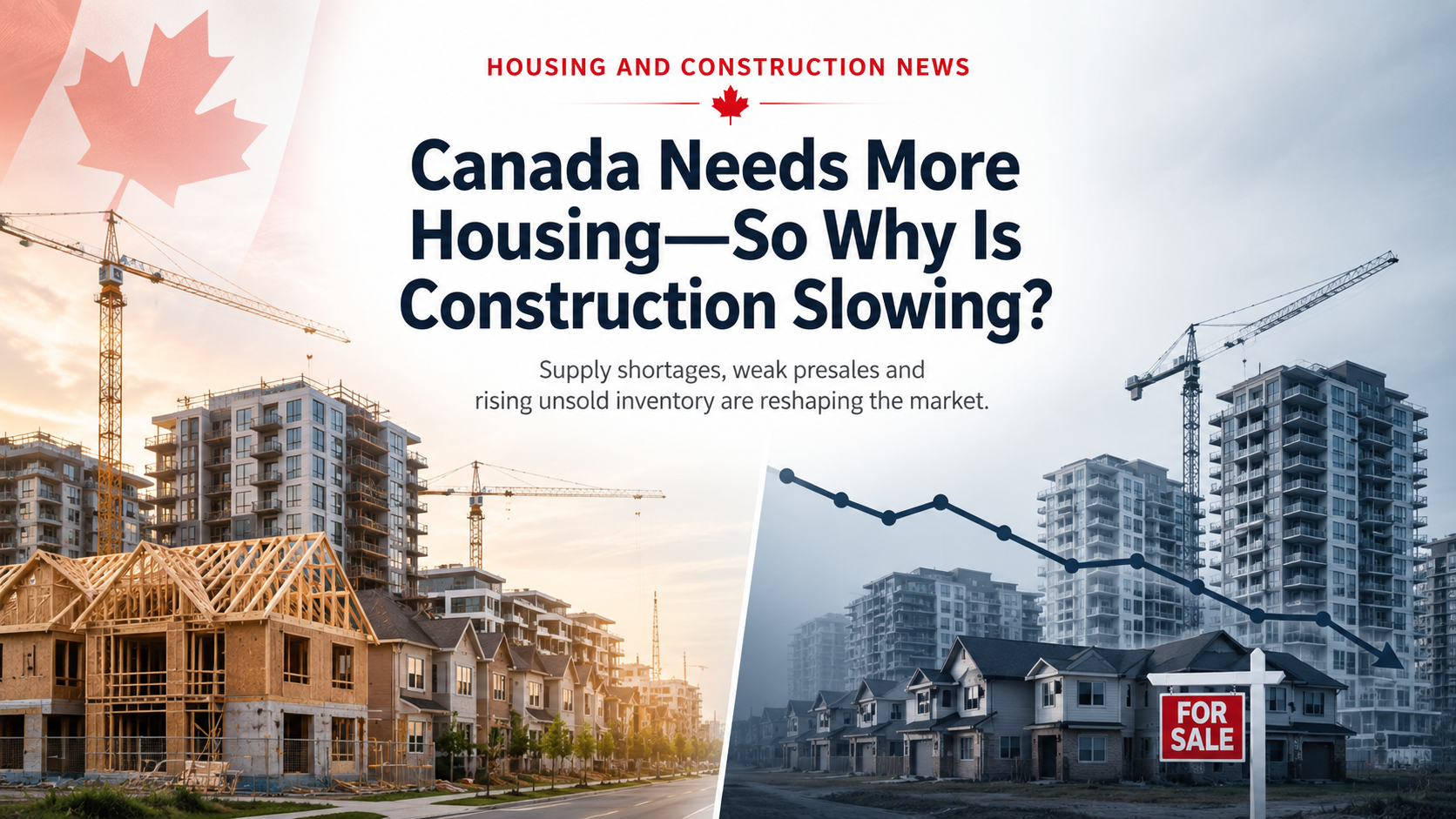
Canada still needs substantially more housing, but the construction picture is not simply rising or falling. CMHC reported that national housing starts increased in 2025, supported by record rental construction and growth in missing-middle housing. At the same time, ownership-oriented development—especially condominium projects in Toronto and Vancouver—came under pressure from weak presales, rising unsold inventory and tighter financing.
Housing need and market demand are different
A city can have a severe shortage of affordable housing while developers struggle to sell newly built units at current prices. Housing need measures how many suitable homes households require. Effective market demand depends on whether buyers can qualify for financing and afford the available product.
Why some projects are slowing
- Weak condominium presales: many lenders require a project to reach a presale threshold before construction financing is released.
- Higher development and borrowing costs: land, materials, labour, insurance, municipal charges and interest all affect project viability.
- Slower population growth and economic uncertainty: these factors can reduce near-term buyer confidence.
- Product mismatch: expensive small units may remain unsold even where family-sized and affordable housing is scarce.
- Large completion pipelines: recently completed units can raise inventory temporarily while new projects are deferred.
What the national numbers say
CMHC’s Spring 2026 Housing Supply Report says Canadian housing starts rose by 6% in 2025. The same report warns that condominium presales collapsed, unsold inventory increased and financial conditions threatened the future ownership-housing pipeline. The 2026 outlook expects total starts to grow, but at a slower pace, with weaker ground-oriented activity in some markets.
Why a slowdown today can create a shortage later
Large developments take years to plan, approve, finance and construct. When projects are postponed or cancelled, the effect on completed supply may not appear immediately. If household formation and demand recover before the project pipeline does, affordability pressure can intensify again.
What this means for skilled trades
A shift away from condominium towers does not eliminate construction work; it changes where the work occurs. Rental buildings, missing-middle housing, renovations, infrastructure and non-residential projects may continue to create demand. Workers should watch local project pipelines rather than assuming one national trend applies everywhere.
What could improve the pipeline
- Faster, more predictable approvals and permitting
- Infrastructure that supports new housing
- Financing tools for rental and affordable projects
- Standardized, modular and lower-cost construction methods
- Apprenticeship capacity and a reliable skilled-trades workforce